
Case formats
- Ring, necklace and earring cases with soft-lined wells
- Watch boxes and travel rolls with fitted cushions
- Multi-piece collection cases with removable trays
- Display trays and stands matching the retail presentation
Industries
Nothing carries perceived value like the box it arrives in. Wooden cases combine protective interiors with a physical presence that says the contents matter.
In jewelry and watches, the box is part of the product's value argument. It is handled by someone who has just spent a significant amount, and every detail — the weight, the lining, the resistance of the hinge — is read as evidence about the piece inside.
At the same time it has to be genuinely protective: polished metal scratches against almost anything, and a watch that shifts in transit comes back as a return.
The brief behind it
Jewelry and watch packaging is the clearest case where the box has to justify a price. The buyer is already sensitive to detail, and the box is inspected with the same attention as the piece — lining for stray fibres, hinges for play, the lid for alignment.
That sensitivity is useful, because it means small engineering decisions pay off disproportionately. A lined insert with a shaped recess, a lid that closes with a soft stop, a case that feels heavier than expected: each one adds perceived value far beyond its cost.
The protective side is equally specific. Polished cases, plated settings, crystals and leather straps each fail differently, and the lining and cavity have to be specified against the actual piece rather than a generic small-item insert.
What you can specify
Every point below is developed with you and confirmed on a physical sample before production.
Send the product dimensions, an approximate quantity and the date you need it. We come back with structure, material and finish options — and a clear quotation.
Start a projectAt a glance
What jewelry and watch packaging has to handle, and how we design around it.
Why it matters
These are the choices this page decides. Getting them right at the sampling stage is what keeps cost and rework out of production.
Discuss your projectWho buys this
The same product is specified very differently depending on who is buying it. These are the briefs we see most often.
How we run it
We are a sourcing and product development partner rather than a single factory. Your project is matched to a specialist workshop in our manufacturing network, and one team stays accountable for the drawing, the sample, the production schedule and the inspection before dispatch.
Your product, sketch or reference photo becomes a working drawing: internal dimensions, wall thickness, opening mechanism and insert layout, with the trade-offs priced.
Before a full sample is made, you compare species, stain and coating on physical boards under your own lighting — the fastest way to avoid a colour surprise.
A physical sample of the actual construction is made and shipped for approval. Nothing goes into a production run before you sign off on it.
The approved sample becomes the standard. We coordinate the schedule with the workshop best suited to the structure, material and quantity, and report progress.
Units are checked against the approved sample during and after production — dimensions, finish, hardware and branding — then packed for the shipping route.
Export cartons, packing lists and shipping documents are prepared against the agreed trade term, and the shipment is coordinated with your forwarder or delivered to the named port.
Common questions
Yes, and it is the usual approach: the same wood and lining used for the counter tray and the customer's case, so the piece is presented consistently from store to home.
Lining specification and fit. Soft non-abrasive linings plus a cavity that holds the piece without contact against hard surfaces — checked with the actual product in place.
Small runs are workable for many constructions. The minimum depends on structure and finish, and is confirmed with your quotation.
Cheap flocking can. We specify a velvet or suede that does not shed, and sample the lining against the piece so you can check it under your own lighting.
A dedicated well with a hook or a shaped recess keeps the chain extended rather than coiled loose. It is a layout decision, not an accessory.
For high-value pieces, no — it should travel inside an outer carton with blocking. For low-value items a padded mailer can work, but the safe standard is a carton.
Yes — a denser species, thicker walls and a solid base all add perceived weight. It also adds freight cost, so we usually tune it against the price point.
Yes. Travel rolls use a central core with individual slots and are a natural companion product to a watch box.
Related
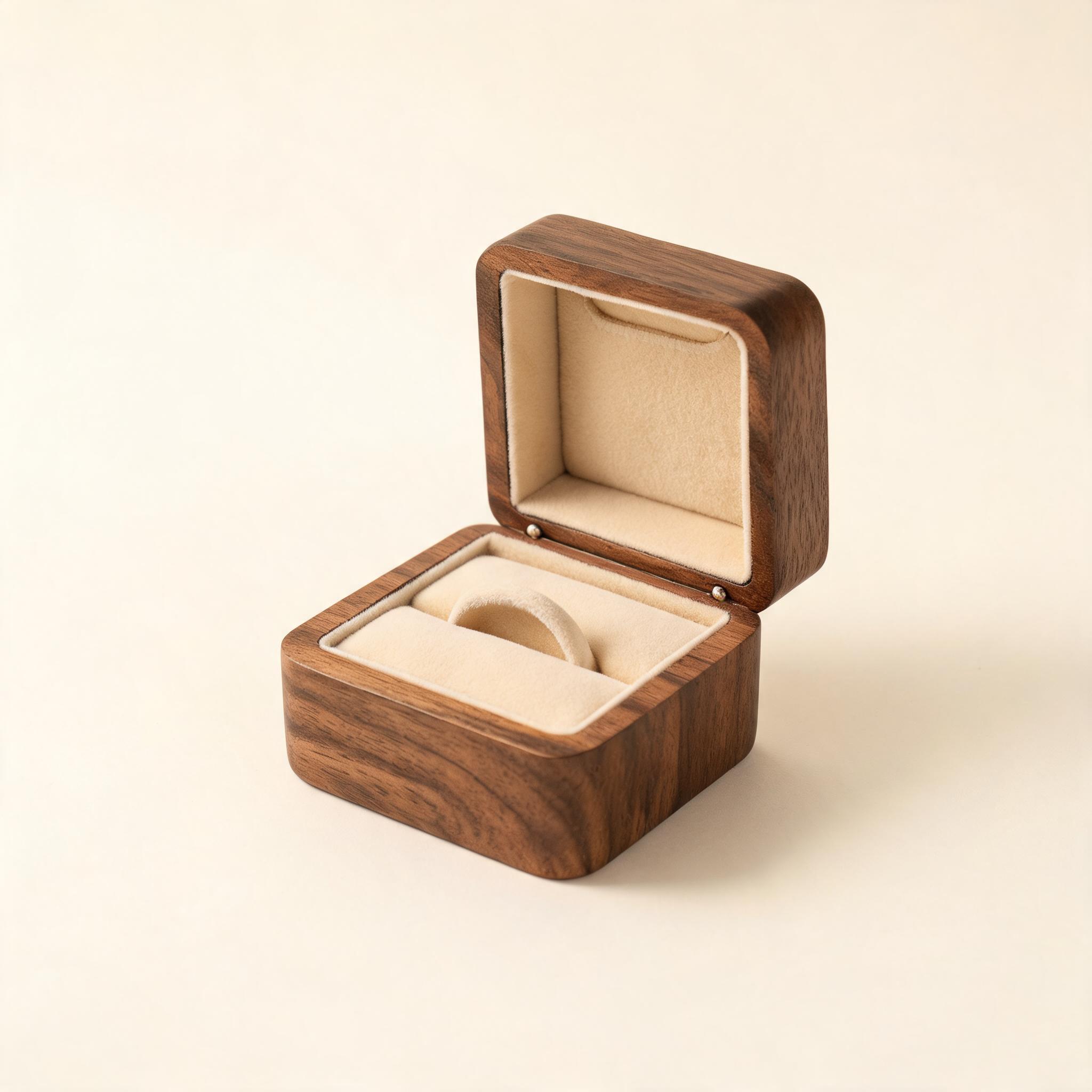
Compact jewelry cases with soft-lined compartments for rings, necklaces and sets.
Read more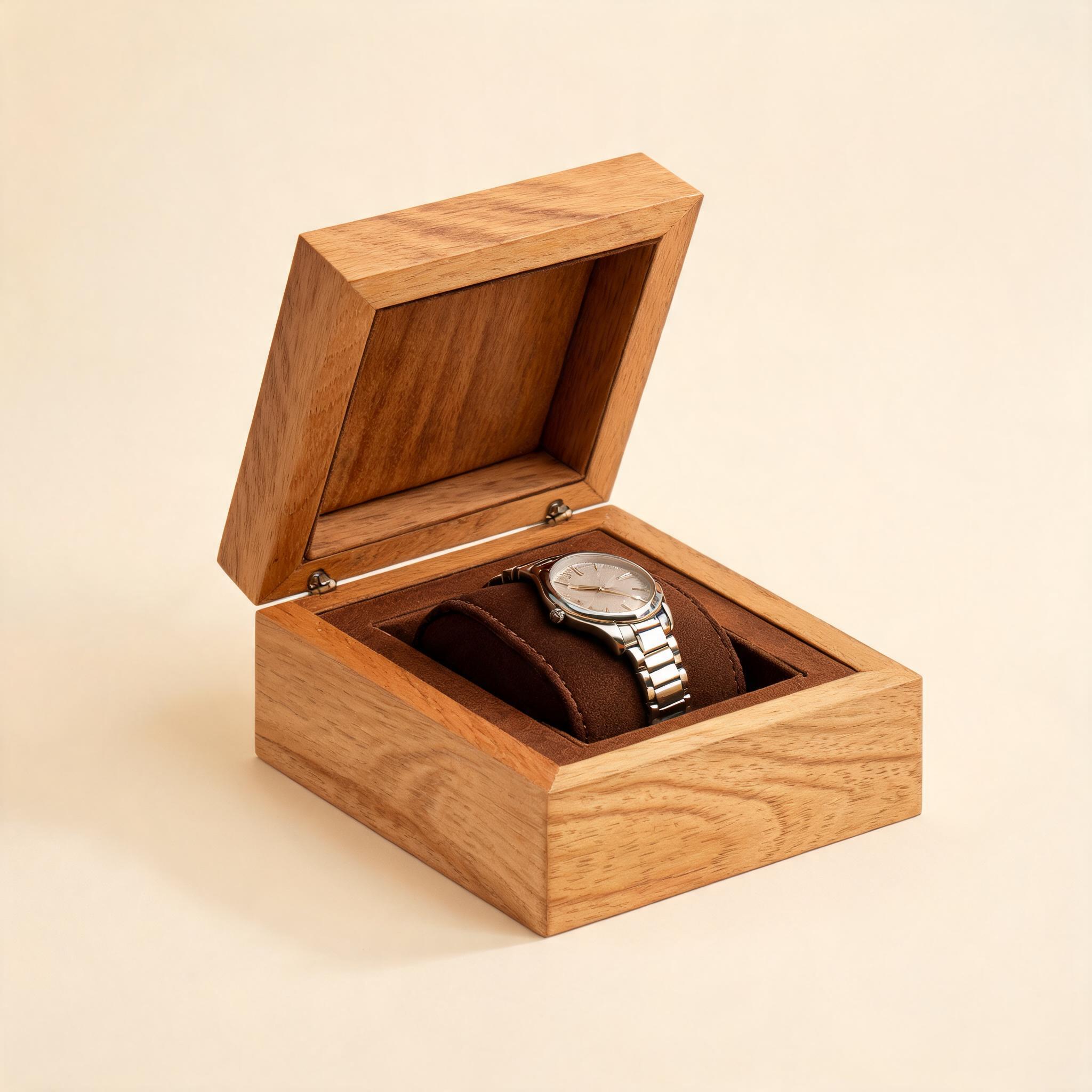
Watch boxes and roll cases with cushions that protect the piece and present the brand.
Read more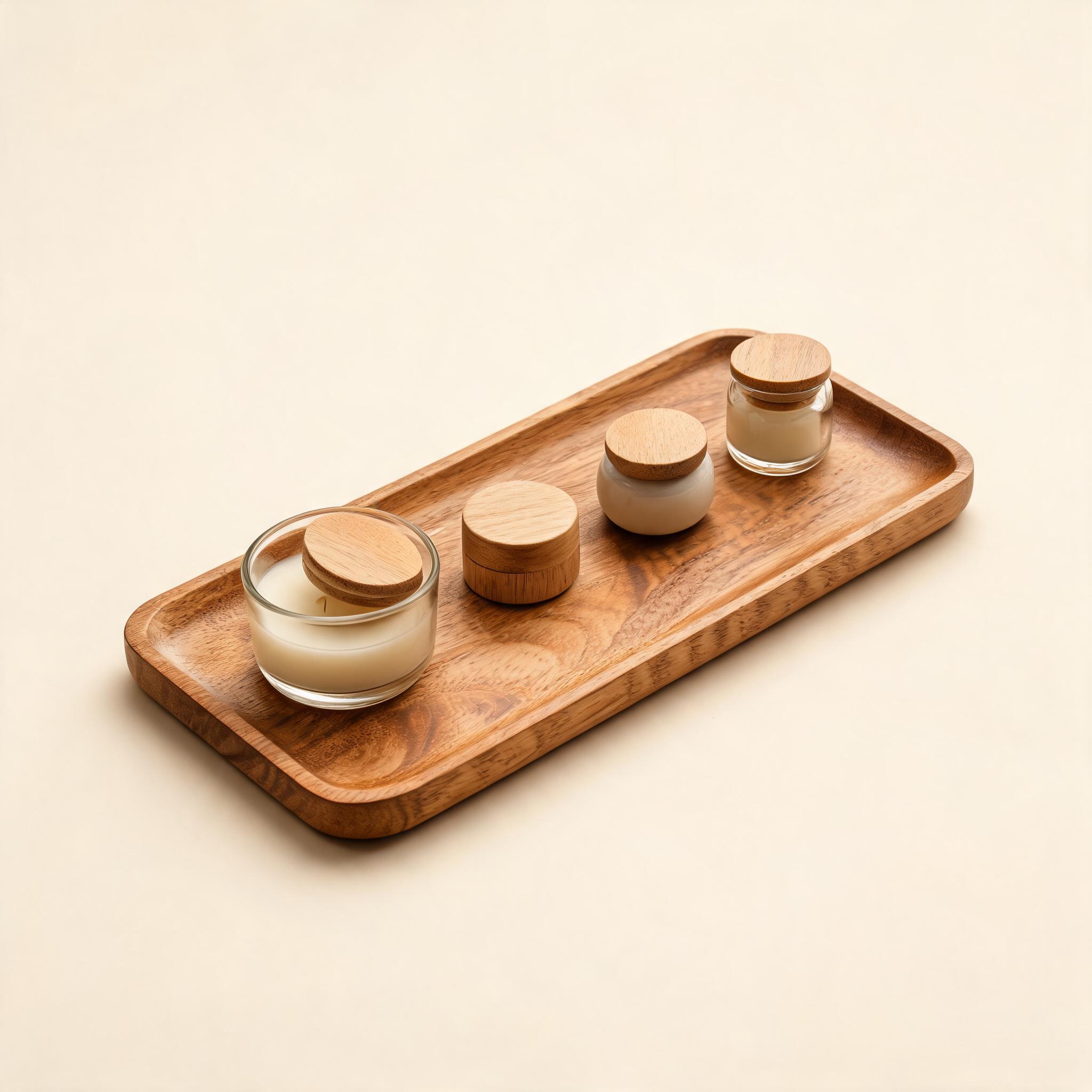
Trays and risers that organize, elevate and group products for sale.
Read moreBack to the range
Send the brief — we'll come back with structure, material and finish options for jewelry & watches, plus a clear quotation.