
Closures & hinges
- Butt, concealed and piano hinges
- Hidden magnet closures for a clean exterior
- Hasps, buckles, clasps and small locks
- Ribbon ties and leather straps
Custom Solutions
Small metal parts decide how the box feels to open — and whether it stays closed in transit.
Hardware is where a box reveals its price point faster than anywhere else. A cheap hinge rattles and drifts; a well-matched one lets the lid settle with a controlled stop. Magnets give a clean, hardware-free look but demand tighter tolerances in the wood.
We match the fitting to the structure rather than adding it afterwards: a hinged lid needs stops, a sliding lid needs a finger pull, a travel case needs a latch that will not open in a bag.
The brief behind it
No other component changes how a box feels as much for as little material cost. A hinge with a stop makes the lid settle; a hinge without one lets it fall back. A magnet closure gives a soft, precise close; a loose hasp rattles.
The engineering constraint is tolerance. Magnets and concealed hinges need the wood to hold a tight dimension, which is more expensive to make consistently than a surface-mounted hinge. Choosing a hidden fitting is therefore also choosing a higher manufacturing standard.
The third consideration is the journey. Anything that will travel in a bag or a parcel needs a closure that cannot open accidentally, which usually means a mechanical latch rather than a magnet.
What you can specify
Every point below is developed with you and confirmed on a physical sample before production.
Send the product dimensions, an approximate quantity and the date you need it. We come back with structure, material and finish options — and a clear quotation.
Start a projectAt a glance
What each fitting does, and when it earns its cost.
Why it matters
These are the choices this page decides. Getting them right at the sampling stage is what keeps cost and rework out of production.
Discuss your projectWho buys this
The same product is specified very differently depending on who is buying it. These are the briefs we see most often.
Common questions
Up to a point, and the tolerance of the wood matters as much as the magnet strength. For larger or heavier lids we recommend a mechanical hinge with a magnet as secondary closure.
If it is screwed rather than riveted, yes. Where long service life is expected — display fixtures, reusable cases — we specify removable fixings.
It usually should. Using one hardware family across boxes, trays and fixtures keeps a range reading as one system, and it simplifies spare-part handling.
Sometimes. It has to be tested against the lid weight and the wood thickness, and it becomes your responsibility for availability — but it is possible and we will advise.
Usually the screw holding in a soft wood, or a hinge rated below the lid weight. Inserts, thicker walls or a different hinge solve it; retightening does not.
Only if the box travels or contains something valuable. A lock adds cost and weight, and it changes the visual language of the product.
Neither — they read differently. Brass warms with age and suits traditional products; nickel stays bright and suits modern ones. We sample both against the wood.
Related

How the box opens and how it is built — the two decisions that constrain everything else.
Read more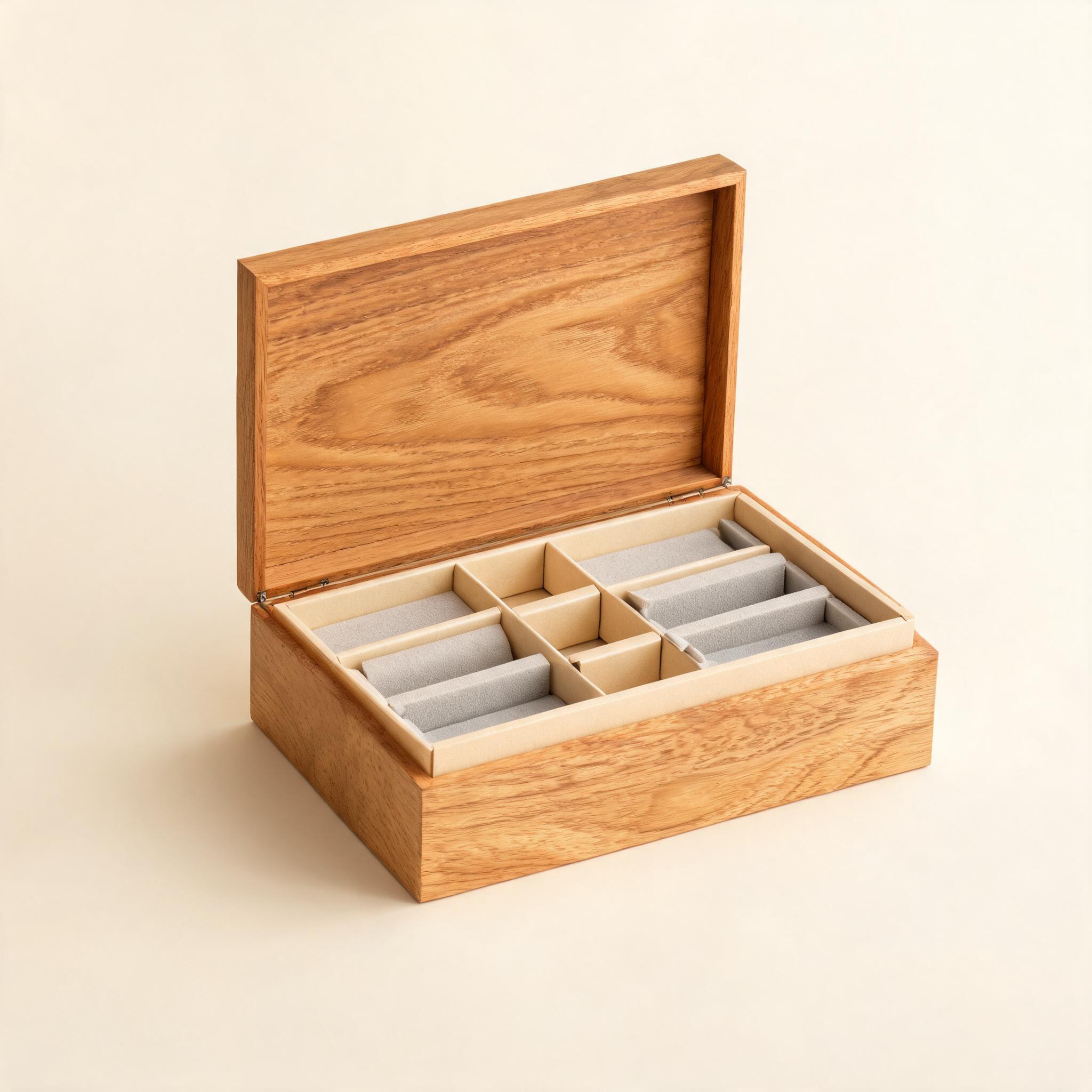
The inside is where the product is actually judged — and where transit damage is prevented.
Read more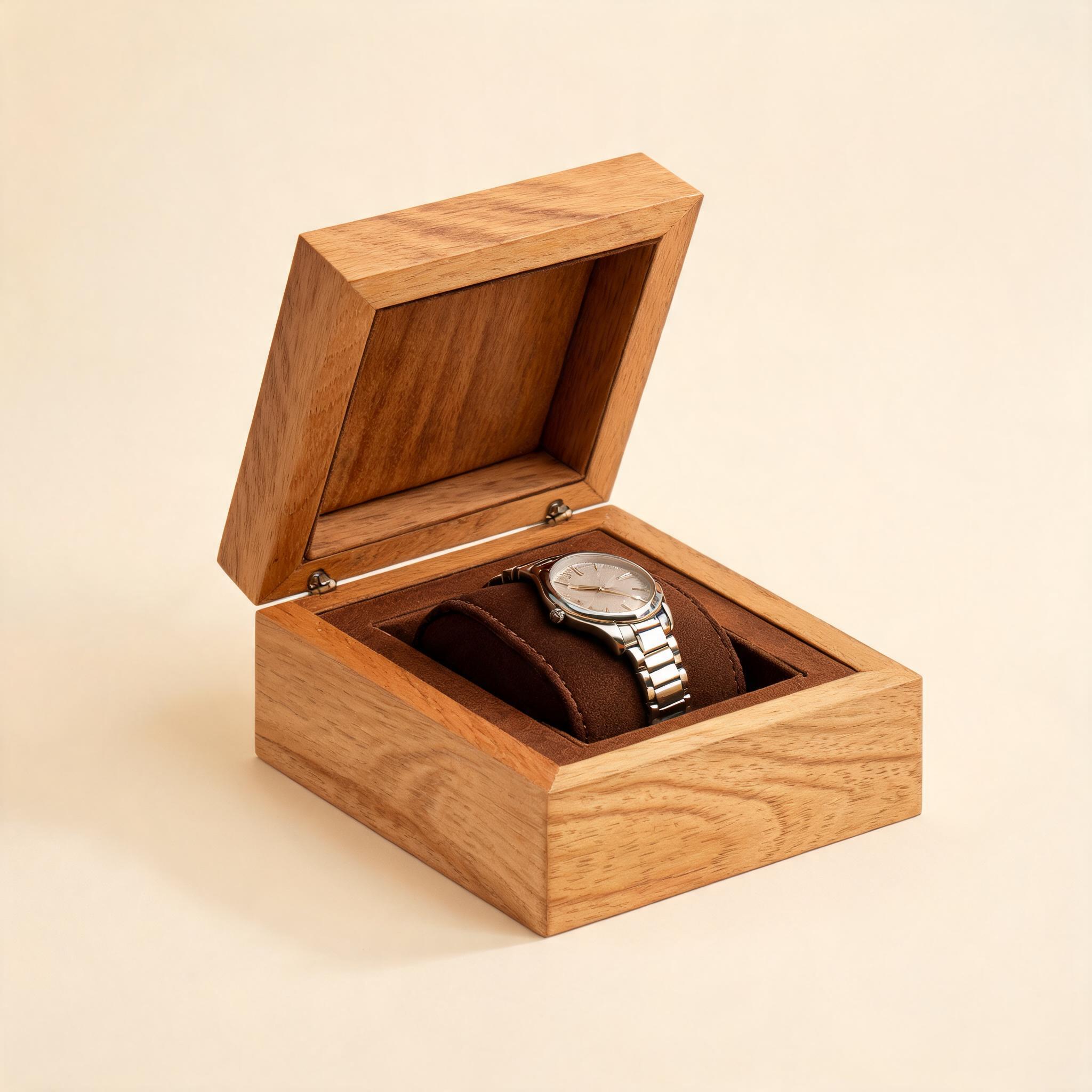
Watch boxes and roll cases with cushions that protect the piece and present the brand.
Read moreBack to the range
Send the brief — we'll come back with structure, material and finish options for hardware & accessories, plus a clear quotation.